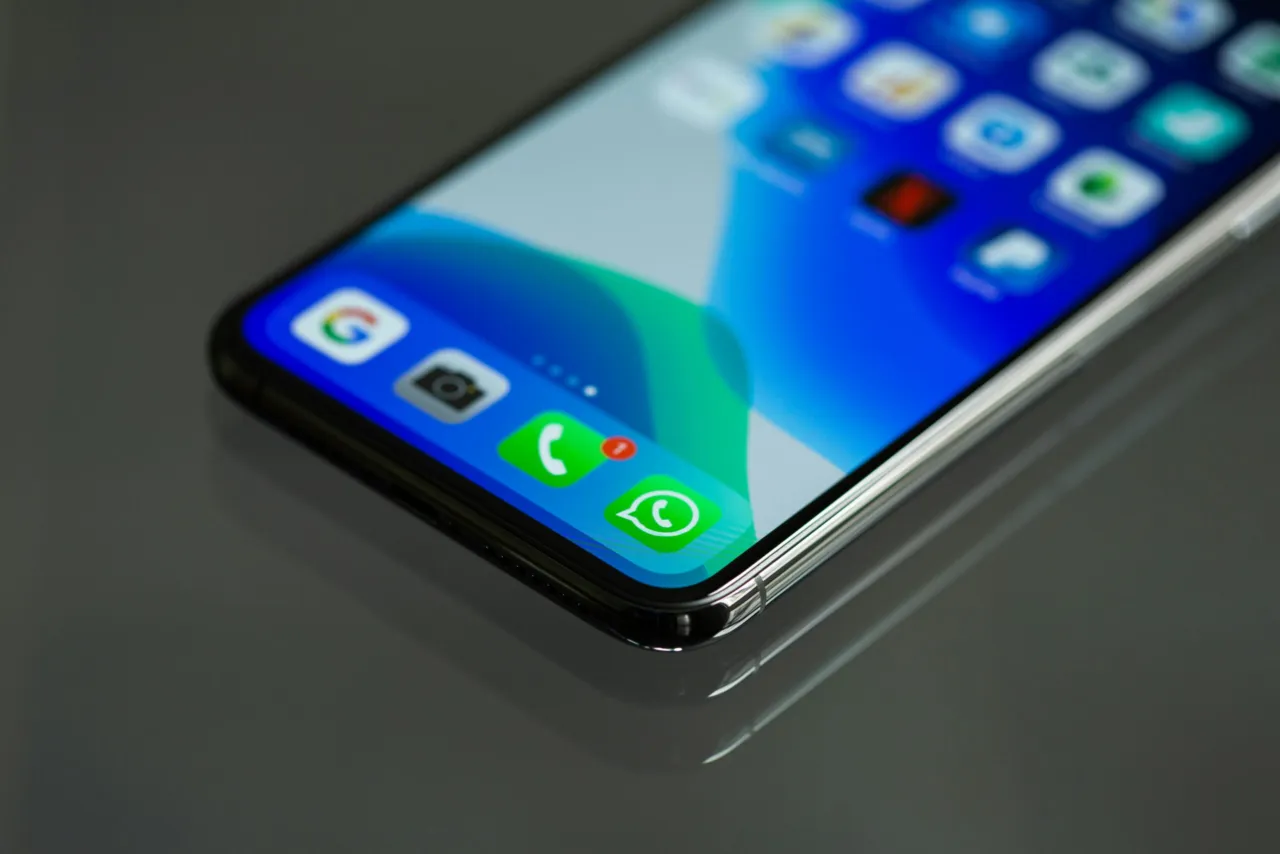
Updated guide (2026): does a WhatsApp message count as evidence at trial, and how to submit it with full validity.
In recent years, WhatsApp messages have become one of the most common items of evidence that parties submit to Spanish courts. However, these messages are not always admitted or considered valid. Judgment 514/2025 of 3 July, handed down by the Social Chamber of the High Court of Justice of Madrid, is a relevant reminder of the need to properly establish the authenticity and authorship of this kind of digital communication.
The case
The proceedings arose from the disciplinary dismissal of a domestic employee, the employer considering that she had disclosed private information about the family she worked for. As the main basis for that decision, WhatsApp messages and emails were submitted in which the leak was supposedly shown. Social Court no. 37 of Madrid declared the dismissal unfair, a finding later confirmed on appeal by the High Court of Justice.
Legal reasoning
The court concluded that the messages submitted lacked sufficient evidential value, as the minimum requirements for granting them authenticity and credibility were not met. In particular, the identity of the senders and recipients of the messages could not be reliably established; the ownership of the mobile terminals from which the communications were sent was unknown; and the authenticity of the email accounts used was not proven. The Chamber therefore held that those elements proved nothing, as they offered no guarantee as to their origin, integrity and authorship.
Requirements for WhatsApp messages to be valid evidence
The case law holds that WhatsApp communications may be assessed as evidence provided certain conditions are met. Authenticity: proof that the content has not been manipulated, which usually requires an IT expert report. Identification of the parties: verification of the ownership of the telephone numbers or accounts from which the messages were sent. Integrity of the conversation: submission of the whole exchange, avoiding partial extracts that may alter the context. Corroboration: the existence of other evidence (witnesses or experts) reinforcing the credibility of the messages.
Conclusion
The judgment shows that WhatsApp messages, on their own, are not conclusive evidence in court proceedings unless their authenticity and the identity of the parties are duly proved. Before basing a claim on this kind of communication, it is therefore essential to obtain proper legal advice and, where appropriate, an IT expert report guaranteeing its procedural validity.
The Supreme Court’s warning about screenshots
The reference decision is Supreme Court judgment 300/2015 of 19 May, which warned of the ease with which conversations on messaging applications and social networks can be manipulated, and held that, when the authenticity of a printed conversation is disputed, the party relying on it must prove it, normally through expert evidence identifying the origin of the messages, the devices involved and the absence of alteration. The judgment did not exclude these messages as evidence; it demanded rigour. In practice, a screenshot accepted by the opposing party is evaluated freely by the court together with the rest of the evidence, while a screenshot that is challenged and not supported by any further proof is often given little or no weight.
How to bring the messages into the proceedings
There are several ways to give the messages evidential strength, and they may be combined. The device itself may be produced before the court clerk (Letrado de la Administración de Justicia), who compares the printed transcript with the conversation on the telephone and certifies it, or the party may request that the comparison be made at the hearing. A notary may draw up a notarial act recording the content displayed on the device on a given date, which attests to what was shown, although not to its origin. A computer forensic expert may extract the conversation with a forensic tool, calculate the hash values and report on its integrity and on the absence of signs of manipulation, which is the most robust option when the other party is expected to dispute the messages. Finally, the court may order the seizure and examination of the counterpart’s device, and the testimony of the participants themselves is often decisive.
What the messaging provider can and cannot supply
End-to-end encrypted services do not retain the content of the messages, so a judicial request to the provider will not produce the conversation. What the court may obtain, through a reasoned decision, is the metadata: account identifiers, registration data, connection logs and, in some cases, the fact that communications took place between two numbers at certain times. This is why the messages must be preserved on the devices from the outset, without deleting or editing the conversation, and why exporting the chat with its media files, and keeping the original telephone, are recommended before any dispute begins.
Frequently asked questions
Is a screenshot of a WhatsApp conversation enough?
No. A screenshot alone does not prove authenticity or authorship; an expert report, the identification of the parties and the whole conversation are usually needed.
How is the authorship of a message proved?
By verifying the ownership of the telephone number or account, ideally through an IT expert report and corroborating evidence such as witnesses.
Does this apply to criminal proceedings as well?
Yes. In criminal proceedings the same requirements of authenticity, integrity and chain of custody apply, and the digital evidence may be challenged if they are not met.
Are WhatsApp screenshots valid evidence in Spain?
Yes, but if their authenticity is disputed the party relying on them must prove it, usually by expert evidence, as the Supreme Court held in judgment 300/2015 of 19 May.
Can the court ask WhatsApp for the content of the conversation?
No. End-to-end encrypted services do not retain message content; the court may only obtain metadata such as account and connection data through a reasoned decision.
Related guides
- Chain of custody of evidence in Spain
- Mobile phone data extraction and the digital chain of custody
- Online insults and slander: how they are proved
Do you need a criminal defence lawyer in Alicante or Madrid now? Société Juridique provides emergency assistance and 24-hour assistance to detained persons in Alicante, Madrid and throughout Spain.
This article is informative in nature and does not constitute legal advice. For a specific case, consult a lawyer.
Francisco Javier Martín Porras
Abogado penalista, socio de Société de Conseil Juridique et Expert y creador de la metodología LIWARD®. Dirige la defensa en procedimientos penales de alta complejidad, combinando estrategia procesal con análisis pericial y forense. Conozca al equipo →